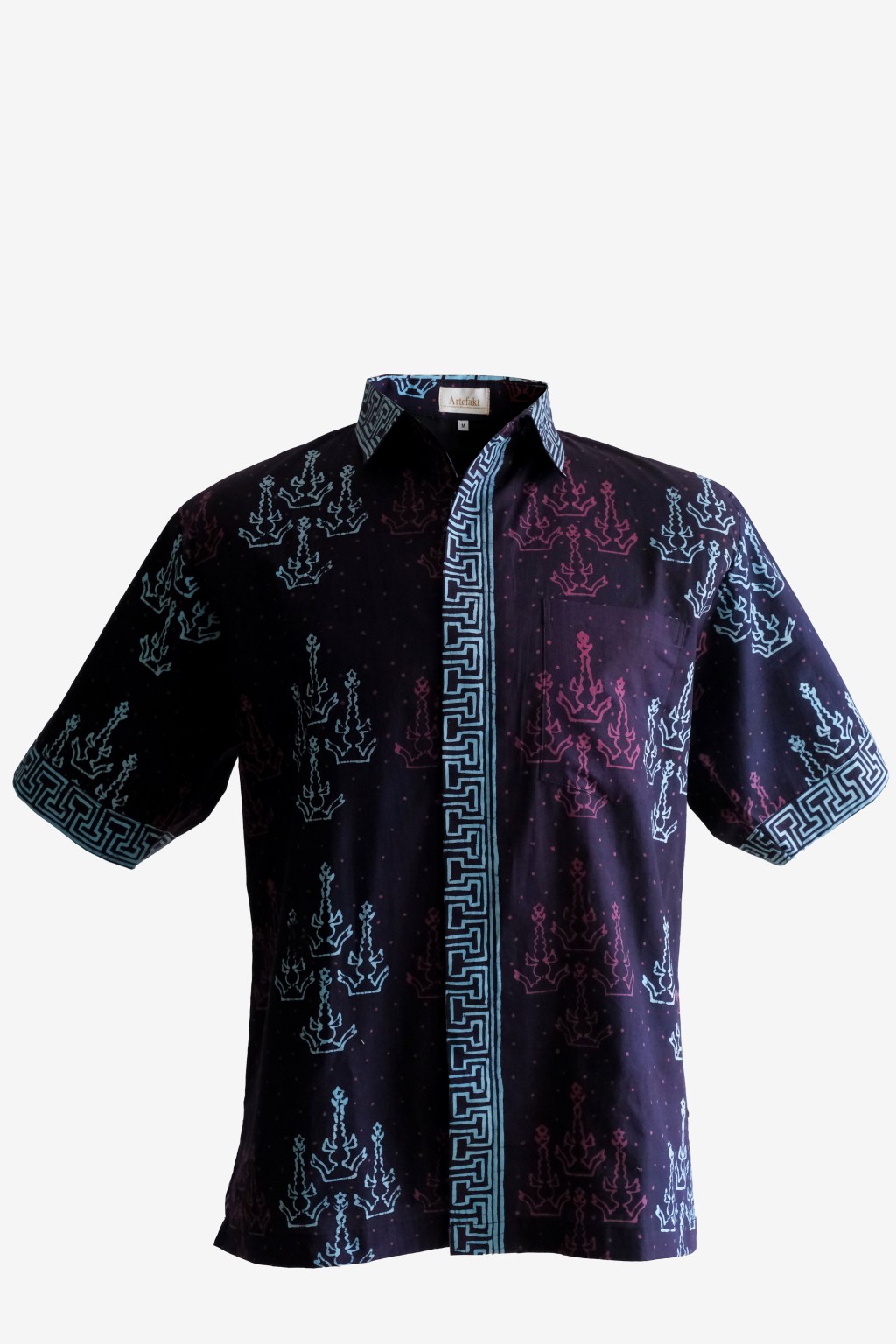
Bantenese Batik is Batik originating from Banten Province. Batik is a cloth with images written or stamped with canting made of copper or zinc plate. In order to produce artistic and classic beauty on cotton or silk batik cloth, you must use wax that has been heated.

The Bantenese Batik patterns and motifs are illumination of the decorative variations that have been studied by the Banten Provincial Government in order to rediscover the ornamental motifs on traditional house buildings in Banten. The study is taking place at the national level and even the Bantenese Batik motifs are being studied at the international level. This decoration became a decision of the Governor of Banten in 2003.
Since being patented in 2003, Bantenese batik has undergone a long process until it is finally recognized throughout the world. Bantenese batik was patented after a study in Malaysia and Singapore which was attended by 62 countries in the world. Banten Batik received the title of the best in the world. After there was an appeal on June 5, World Batik Day, Banten became the first batik to have a UNESCO patent. Even now, Bantenese Batik has expanded to various foreign countries.
Apart from the architectural motifs and patterns of Bantenese Batik in the decorations mentioned above, the colors of Banten Batik are also different from other batiks in Indonesia, the colors of Banten Batik tend to be soft grey, showing the nature and character of the Banten people with an appearance that is always desirable, simple. The name of the Bantenese Batik motif is taken from the toponym of ancient villages, the name of the title of nobleman/Sultan and the name of the layout of the Banten royal palace. Even the patterns are identical to historical stories which contain philosophy (full of meaning) in their motifs with intellectual meaning for the wearer of Bantenese Batik materials and clothing: These Clothes Tell Stories.
Batenese batik has a tell story identity (its motif tells a story) which has its own characteristics compared to other batik. Some of the motifs are adopted from historical objects (artefacts). In each motif there is a gray color which is said to be a reflection of Banten. All batik contains philosophical content. Banten batik has distinctive and unique characteristics because apart from each motif telling a story about history, it also comes from heritage objects such as pottery and the names of Banten kingdom additions such as Aryamandalika, Sabakingking, and others.
 artefakt-clothing.com